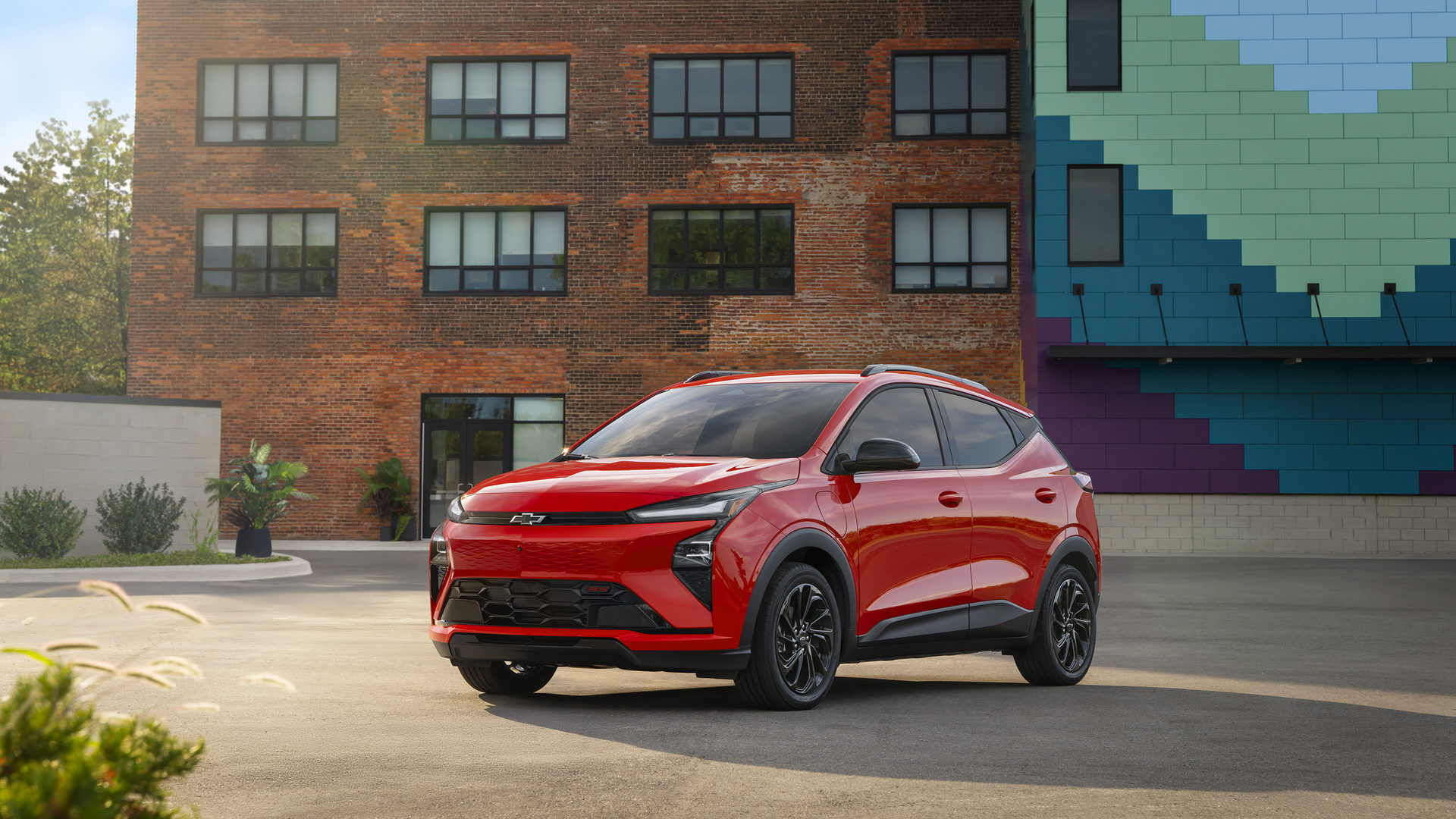

2026 Chevrolet Blazer EV vs 2026 Tesla Model Y: Why Blazer EV Is the Better Electric SUV in British Columbia
British Columbia shoppers cross-shopping electric SUVs keep landing on the same two names: the 2026 Chevrolet Blazer EV and the 2026 Tesla Model Y. One drives like a familiar SUV with a dealership behind it. The other trades buttons for a single touchscreen and a software-first approach to almost everything, including climate and cargo settings. […]
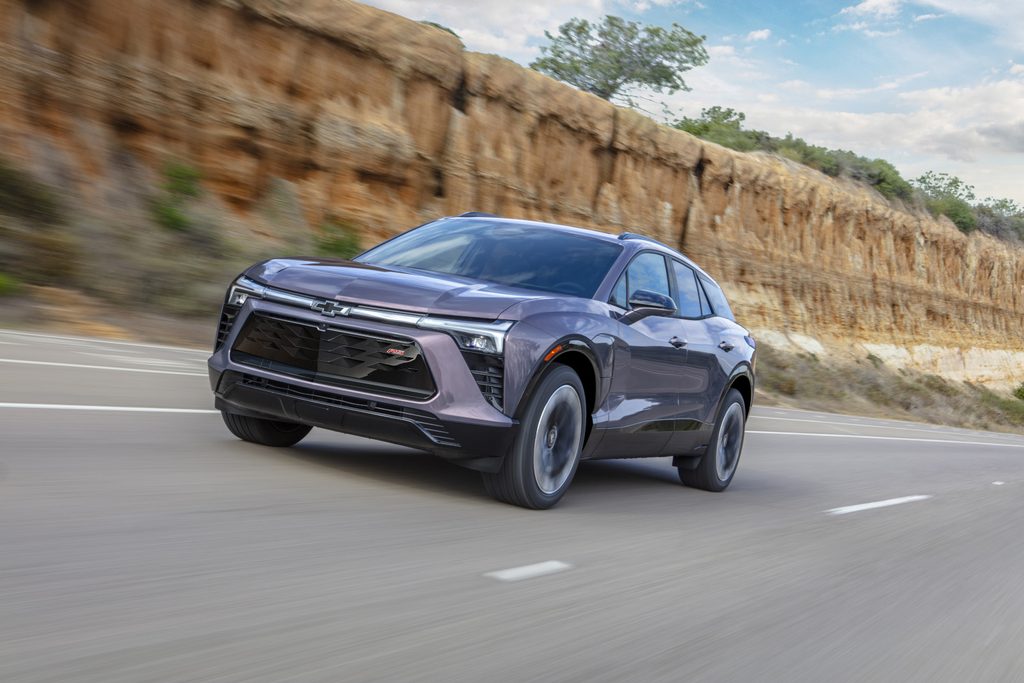
British Columbia shoppers cross-shopping electric SUVs keep landing on the same two names: the 2026 Chevrolet Blazer EV and the 2026 Tesla Model Y. One drives like a familiar SUV with a dealership behind it. The other trades buttons for a single touchscreen and a software-first approach to almost everything, including climate and cargo settings.
This comparison lines up cabin space, charging support, towing, and everyday tech so you can see which one actually fits how you use an SUV, not just which one has the longer spec sheet.
Blazer EV Vs. Model Y: Spec Snapshot
The numbers below cover what matters for daily use: how each cabin feels, how far each one goes, and what each one can carry or tow.
| Spec | Blazer EV | Model Y |
| Touchscreen | 17.7 in, Google built-in | 16 in |
| Ground clearance | 200 mm (LT/RS), 190 mm (SS) | 164-167 mm (151 mm on Performance) |
| Horsepower, top trim | 615 hp (SS, Wide Open Watts mode) | 510 hp (Performance AWD) |
| Range, entry trim | 502 km (LT/RS FWD) | 463 km (Rear-Wheel Drive) |
| Battery warranty | 8 years / 160,000 km, every trim | 8 years / 160,000-192,000 km, varies by trim |
| Range, longest trim | 502 km (LT/RS FWD) | 542 km (Premium Long Range AWD) |
| Max towing | 1,500 lbs (680 kg), AWD trims only | 3,527 lbs (1,600 kg), AWD trims |
| Cargo, seats folded | 1,674 L | 2,118-2,138 L |
The Blazer EV’s advantage shows up in screen size, ground clearance, and top-trim horsepower. The Model Y answers with a longer top-trim range and a larger cargo hold once the seats fold flat.
Cabin Space and Everyday Practicality
Step into the Blazer EV and the layout reads like a conventional SUV. Front headroom measures 1,038 mm, front legroom 1,123 mm, and front shoulder room 1,491 mm; the rear seat offers 968 mm of headroom and 989 mm of legroom.
The Model Y takes a different approach. The lineup gets a flat-folding second row across every trim, plus a closed centre console on Premium and Performance, while the Rear-Wheel Drive trim keeps a simpler manual-folding second row. Most controls live inside the 16-inch touchscreen.
Cargo tells a similar story. With the seats folded, the Model Y holds 2,118 L on Rear-Wheel Drive and 2,138 L on Premium and Performance, more than the Blazer EV’s 1,674 L in the same folded configuration. But the Blazer EV answers with a standard fold-flat 60/40 rear seat and a standard AutoSense power liftgate on every trim, plus an available cargo net and foldable organizer for keeping school bags, sports gear, and errands sorted rather than sliding around an open floor. Day-to-day cargo behind the rear seats runs 722 L.
Range, Charging, and Road-Trip Confidence
Range moves in both directions depending on trim. The Blazer EV’s front-wheel-drive LT and RS trims reach 502 km, more than the Model Y’s entry Rear-Wheel Drive trim at 463 km. Step up to the Model Y’s Premium Long Range AWD and the number climbs to 542 km, the longest figure either SUV posts here; the Blazer EV’s own AWD trims sit at 455 km, with the SS at 486 km.
Charging speed follows a similar split. The Model Y’s Supercharging tops out at 175 kW on Rear-Wheel Drive and 250 kW on Premium and Performance. The Blazer EV pairs its Ultium-based EV engineering with an 11.5 kW onboard charging module standard across every trim, built for home and Level 2 charging rather than a public fast-charge sprint.
Tesla’s Supercharger network gives Model Y owners access to more than 80,000 fast chargers worldwide. GM’s NACS adapters open that same network to the Blazer EV, on top of the more than 25,000 public charging ports GM EV drivers can already reach across Canada, backed by roughly 450 GM dealerships equipped to support EV owners.
Power, Towing, and How Each One Drives
The Blazer EV’s electric lineup spans three configurations:
- Single Motor FWD (LT/RS): 220 hp, 243 lb-ft
- Dual Motor AWD (LT/RS): 300 hp, 355 lb-ft
- Performance Dual Motor AWD (SS): 615 hp, 650 lb-ft (Wide Open Watts mode)
The Model Y counters with 291 hp and 298 lb-ft on Rear-Wheel Drive, 397 hp and 389 lb-ft on Premium Long Range AWD, and 510 hp and 500 lb-ft on Performance AWD. The Blazer EV’s SS still tops that figure at 615 hp in Wide Open Watts mode.
Towing splits the two SUVs clearly. The Model Y’s Premium and Performance AWD trims tow up to 3,527 lbs (1,600 kg) with a Class II hitch, more than the Blazer EV’s 1,500 lbs (680 kg) rating on its AWD two-motor trims (7,273 lbs (3,299 kg) GCWR). But the Blazer EV’s SS, its most powerful configuration, isn’t rated for towing at all, while LT and RS get factory Hitch Guidance and Hitch View, standard trailering wiring, and tongue-weight guidance up to 350 lbs (159 kg), hardware built around a trailer rather than added to one afterward.
Ground clearance favours the Blazer EV throughout the lineup: 200 mm on LT and RS, 190 mm on SS, against 164-167 mm on the Model Y (151 mm on Performance). That extra clearance, paired with the Ride and Handling suspension standard on LT/RS and the SS Ride and Handling suspension on SS, keeps the Blazer EV’s proportions doing what an SUV chassis is built for.
Technology, Driver Assistance, and Ownership Support
The Blazer EV runs a 17.7-inch touchscreen with Google built-in, standard Adaptive Cruise Control on every trim, and Super Cruise, GM’s hands-free driving assistance, available on LT and RS and standard on SS. Enhanced Automatic Parking Assist follows the same pattern: available on LT and RS, standard on SS.
The Model Y’s 16-inch touchscreen, plus an available 8-inch second-row display on Premium and Performance, runs Forward Collision Warning, Active Emergency Braking, Lane Departure Avoidance, and Blind Spot Monitoring across the lineup. Tesla also offers Full Self-Driving (Supervised) as a monthly subscription after a trial period; it still requires an attentive driver and does not make the vehicle autonomous.
Ownership support is where the two approaches really separate. GM backs the Blazer EV with a dealer network of roughly 450 locations across Canada, trained EV technicians, and service locations for the life of the vehicle. That dealer-supported model sits alongside the Blazer EV’s 8-year/160,000 km battery warranty, held consistently across every trim, while the Model Y’s battery coverage runs 160,000 km on Rear-Wheel Drive and stretches to 192,000 km on Premium and Performance.
Why the Blazer EV Fits British Columbia Drivers
For most British Columbia households, an electric SUV needs to haul kids and gear, handle a mix of road conditions, and stay serviceable close to home. The Blazer EV checks each box: taller ground clearance than the Model Y at every trim, a cabin sized for family use, and a dealer network built to support the vehicle for years after delivery.
The SS trim adds 615 hp for drivers who want performance without leaving the SUV body style behind, while LT and RS keep towing and Hitch Guidance in reach for weekend trailers. Add a charging strategy that already reaches Tesla’s Supercharger network through GM’s NACS adapters, and the Blazer EV covers the same ground the Model Y does, backed by a dealership standing behind it.
Test-Driving the 2026 Blazer EV at Maple Ridge Chevrolet Buick GMC
The 2026 Chevrolet Blazer EV pairs Ultium-based EV engineering with a familiar SUV cabin, a taller ride height, and factory-ready trailering hardware built for everyday family use across British Columbia.
Visit Maple Ridge Chevrolet Buick GMC in Pitt Meadows to sit inside the Blazer EV, compare trims in person, and talk through charging and towing questions with the sales team.