Key differences between 2027 Chevrolet Bolt and 2026 Nissan LEAF
Shopping for an electric hatchback or crossover in British Columbia this fall? The Chevrolet Bolt and Nissan LEAF land in a similar size and price class, but they solve daily driving in different ways. One leans on charging speed and cabin space, the other stretches range and screen size. Here is how they actually compare […]
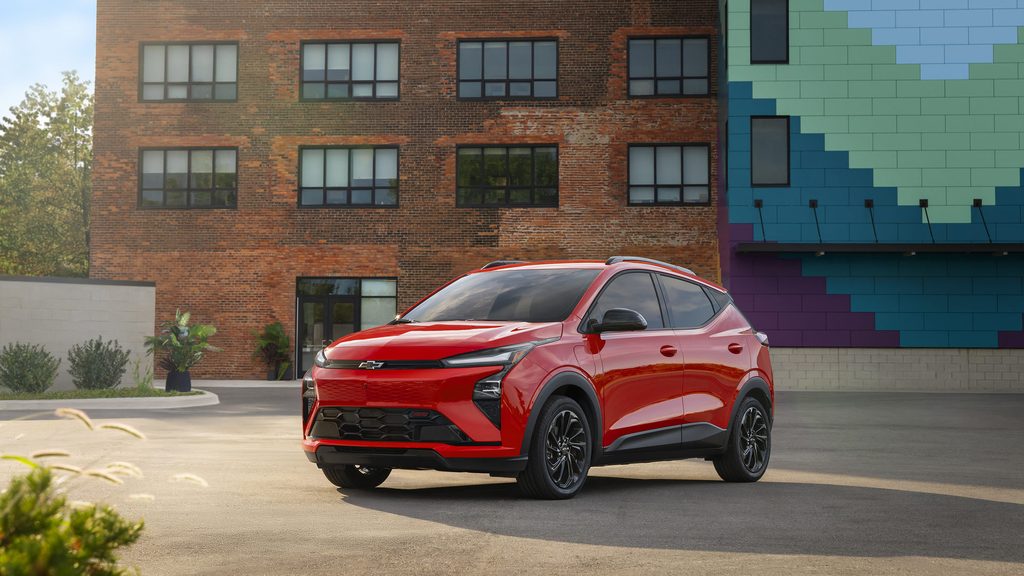
Shopping for an electric hatchback or crossover in British Columbia this fall? The Chevrolet Bolt and Nissan LEAF land in a similar size and price class, but they solve daily driving in different ways. One leans on charging speed and cabin space, the other stretches range and screen size. Here is how they actually compare where it counts.
Bolt vs. LEAF: Specs Side by Side
| Spec | Chevrolet Bolt | Nissan LEAF |
| Onboard AC charging power | 11.5 kW | 7.2 kW |
| DC fast-charge time (10-80%) | 26 minutes | 35 minutes |
| Google built-in availability | Standard, LT and RS | Available, SV+ and PLATINUM+ only |
| Curb weight | 1,713 kg | 1,802 kg (S grade) |
| Rear-seat legroom | 993 mm | 808 mm |
| Overall length | 4,307 mm | 4,404 mm |
| Ground clearance | 141 mm | 134.6 mm |
| Cargo volume, seats folded | 1,594 L | 1,572 L |
| Electric range | 410 km | 488 km (S+ grade) |
| Cargo volume, behind rear seats | 458 L | 566 L |
| Charging port | NACS | NACS |
Body Style and Everyday Footprint
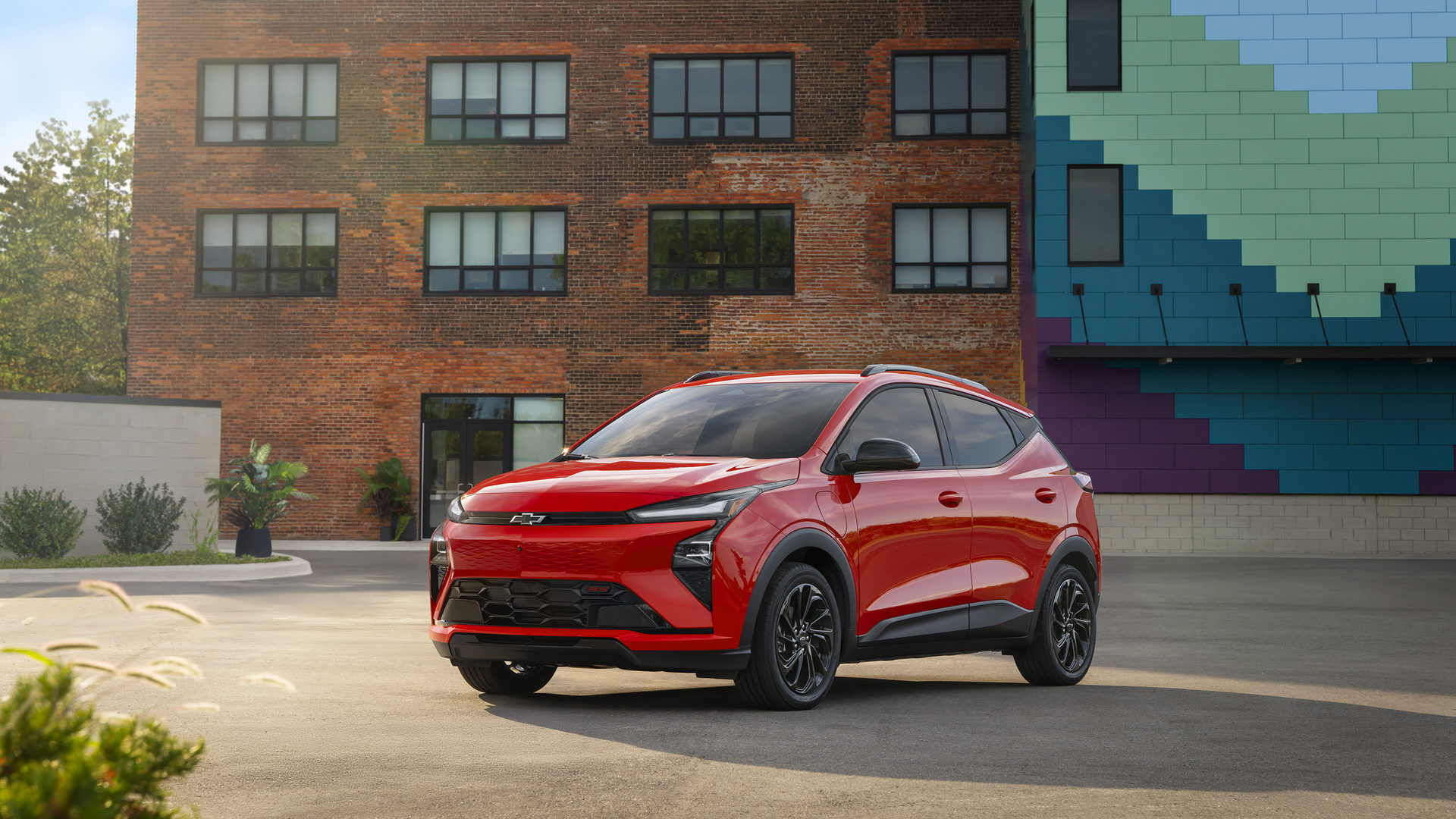
The Bolt keeps its hatchback shape, while the LEAF wears an SUV-styled body with a taller-looking stance. The numbers tell a different story on actual height: the Bolt stands 1,622 mm tall against the LEAF’s 1,557 mm, so the hatchback badge does not mean a lower seating position here.
Ground clearance runs the same direction. The Bolt clears 141 mm versus the LEAF’s 134.6 mm, a modest but real edge over curbs, gravel driveways and speed bumps.
The LEAF’s 35.4-foot curb-to-curb turning diameter, about 10.8 metres, is tighter than the Bolt’s 11.5-metre circle. But the Bolt’s shorter, narrower body still eats less driveway and street-parking space day to day, at 4,307 mm long and 1,770 mm wide against the LEAF’s 4,404 mm and 1,811 mm.
Range, Battery Strategy and Cold-Weather Charging
The Bolt uses a 65 kWh lithium iron phosphate battery pack rated for 410 km of range, driving a single front motor at 210 hp and 169 lb-ft of torque. The LEAF’s entry configuration pairs a 52 kWh battery with a 174-horsepower motor, while its S+ grade steps up to a 75 kWh pack rated for up to 488 km, the LEAF’s longest-range figure.
With the average Canadian driver covering roughly 50 km a day, the Bolt’s 410 km already covers that distance many times over between charges, and its lithium iron phosphate chemistry is built for repeated charge cycles over a long service life.
The LEAF pairs its battery with a standard heat pump and battery heater to keep charging predictable when temperatures drop, warming the pack ahead of a public charging session. The Bolt answers with a faster turnaround at the plug either way: a 10% to 80% DC fast charge in 26 minutes against the LEAF’s 35, and an 11.5 kW onboard charger that recovers overnight range quicker than the LEAF’s 7.2 kW unit.
Charging at Home, on the Road and in Public
Both vehicles now use NACS charging ports, with the Bolt as Chevrolet’s first vehicle to carry a native NACS plug, opening up Tesla Supercharger access without an adapter. Both also top out at 150 kW on public DC fast chargers.
The gap shows up in time spent charging. The Bolt needs 26 minutes to go from 10% to 80%, while the LEAF needs 35 minutes for the same window, a difference that adds up across a multi-stop road trip.
At home, the Bolt’s 11.5 kW onboard charger on a 240V, 60A dedicated station adds roughly 64 km of range per hour, ahead of the LEAF’s 7.2 kW charger. For apartment or condo owners without a high-power circuit, both vehicles still accept a standard portable cord, though the Bolt’s onboard hardware makes better use of a stronger circuit when one is available.
Cabin Room, Rear Seats and Cargo Flexibility
Rear-seat space is where the Bolt pulls ahead. Its second row offers 993 mm of legroom against the LEAF’s 808 mm, a difference that matters for adults riding in back on longer trips. The LEAF counters with more front shoulder and hip room, at 1,422 mm and 1,351 mm against the Bolt’s 1,387 mm and 1,304 mm, so front-seat passengers sit a touch wider in the LEAF.
Cargo tells a mixed story. The LEAF holds more directly behind its rear seats, at roughly 566 L against the Bolt’s 458 L, before folding anything down. Fold the second row flat, and the Bolt moves back into the lead with 1,594 L to the LEAF’s 1,572 L, the number that matters most on gear-heavy weekends when the back seat folds away.
Screens, Seats and Cabin Content
The LEAF’s cabin can outsize the Bolt’s on paper. Its dual displays start at 12.3 inches on the S and S+ grades and grow to 14.3 inches on SV+ and PLATINUM+, next to the Bolt’s single 11.3-inch touchscreen and 11-inch driver display. But Google built-in, with integrated Google Maps and voice assistance, is standard on the Bolt from the LT trim up, while the LEAF reserves the same functionality for its SV+ and PLATINUM+ grades, tied only to the larger screens.
Heated front seats come standard on both the Bolt and every LEAF grade. The heated steering wheel is where they part ways: standard on both the Bolt LT and RS, but held back for the LEAF’s SV+ and PLATINUM+ trims. The Bolt also offers ventilated front seats, available on LT and standard on RS, along with Evotex seating material on the RS trim.
Driver-Assist Features Both Share, and Where They Differ
Both vehicles start from a similar active-safety baseline. Every Bolt trim includes Forward Collision Alert, Automatic Emergency Braking, Lane Keep Assist with Lane Departure Warning and Adaptive Cruise Control as standard equipment. Every LEAF grade includes Nissan Safety Shield 360, covering Automatic Emergency Braking with Pedestrian Detection, Rear Cross Traffic Alert, Lane Departure Prevention and Forward Collision Warning, plus standard ProPILOT Assist.
The two diverge on hands-free capability. Chevrolet offers available Super Cruise, a hands-free driver-assist system for compatible highway routes, paired with Google Maps to show which stretches qualify. The LEAF’s ProPILOT Assist combines adaptive cruise control with steering assistance to help keep the vehicle centred in its lane, without the same hands-free provision.
A handful of Bolt features, like Front and Rear Park Assist, HD Surround Vision and Driver Attention Assist, are available rather than standard, so confirm which driver-assist equipment comes on your specific trim before you commit.
Why the Bolt Fits British Columbia Daily Drivers
For most day-to-day driving, charging speed and cabin practicality matter more than a range figure sitting mostly unused. The Bolt’s 410 km already covers the average commute many times over, its 26-minute fast charge and 11.5 kW home charging get you back on the road quicker, and Google built-in comes standard from the first trim rather than being held for pricier grades.
Add in more rear legroom, a narrower and shorter footprint for tighter parking, and a heated steering wheel standard across both trims, and the Bolt lines up with how drivers actually use an electric hatchback: short daily trips, the occasional longer haul and easy parking at home.
Test-Drive the 2027 Bolt at Maple Ridge Chevrolet Buick GMC
The 2027 Chevrolet Bolt pairs a 410 km range with faster charging, standard Google built-in and a cabin built for real rear-seat room, a practical answer for anyone comparing electric hatchbacks and crossovers this year.
Visit Maple Ridge Chevrolet Buick GMC in Pitt Meadows to see the 2027 Bolt in person, compare LT and RS trims, and find the configuration that fits your daily drive.