2026 Chevrolet Tahoe or 2026 Chevrolet Suburban: Which Full-Size SUV Fits Your British Columbia Family?
Choosing between the Chevrolet Tahoe and Suburban comes down to how your family actually uses a full-size SUV. Both ride on the same platform, share engines, and offer comparable cabin technology, yet the two solve different problems for British Columbia households. One favours easier parking and daily manoeuvring; the other stretches for maximum passenger and […]
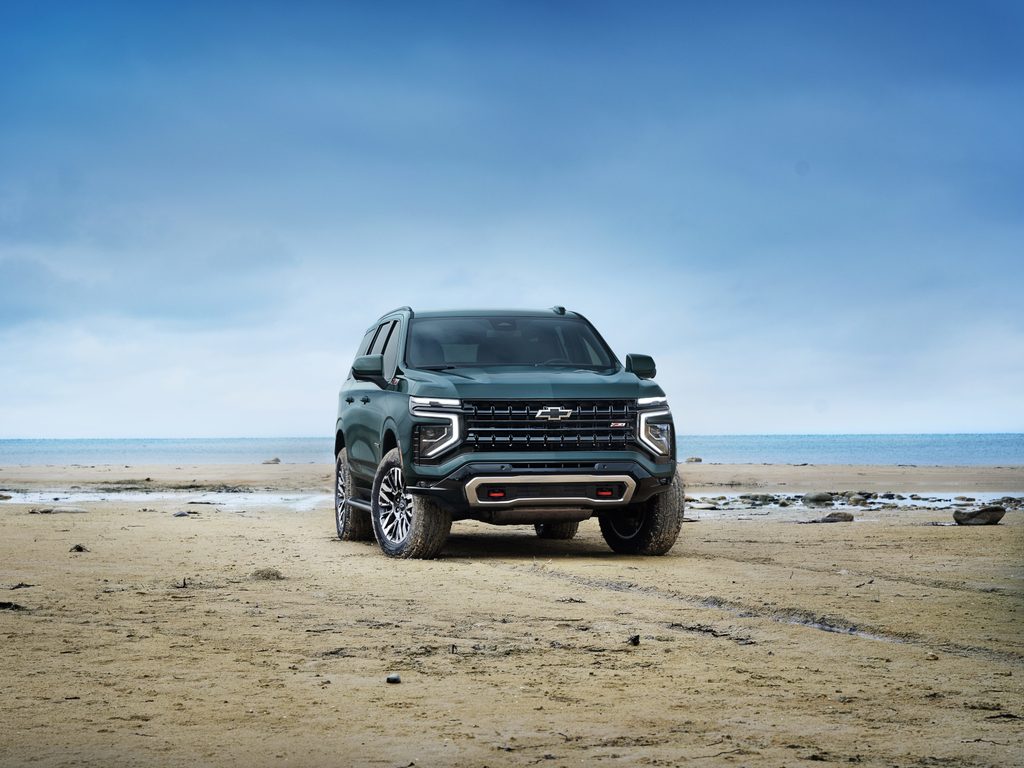
Choosing between the Chevrolet Tahoe and Suburban comes down to how your family actually uses a full-size SUV. Both ride on the same platform, share engines, and offer comparable cabin technology, yet the two solve different problems for British Columbia households. One favours easier parking and daily manoeuvring; the other stretches for maximum passenger and cargo room.
This guide compares manoeuvrability, family space, towing setup, and feature availability so you can match the right model to your driveway, your trips, and your family size.
Tahoe vs. Suburban: Key Specs Side by Side
| Spec | Tahoe | Suburban |
| Overall length | 5,367 mm | 5,748 mm |
| Wheelbase | 3,071 mm | 3,406 mm |
| Third-row legroom | 886 mm | 932 mm |
| Cargo behind third row | 722 L | 1,175 L |
| Cargo behind second row | 2,053 L | 2,656 L |
| Max cargo, rear seats folded | 3,474 L | 4,092 L |
| Max towing (Max Trailering Package) | 8,400 lbs (3,810 kg) | 8,200 lbs (3,719 kg) |
| Fuel tank capacity | 91 L | 106 L |
Manoeuvring City Streets and Garage Spaces
Every extra millimetre of length changes how an SUV feels in a parking garage or a narrow driveway. The Tahoe’s 5,367 mm overall length and 3,071 mm wheelbase make it noticeably easier to place in tight downtown stalls, mall garages, or a standard residential garage. If your household spends most of its time on city streets, school pickup lines, and grocery runs, that shorter footprint pays off every day.
The Suburban stretches to 5,748 mm overall with a 3,406 mm wheelbase, a difference that shows up mainly in wider turns and longer parking stalls. For families who trade some manoeuvrability for room to spread out on road trips or move gear for extended family gatherings, that extra length is the point, not a drawback.
Neither model is compact, but the Tahoe asks less of your parking spot while the Suburban asks more of your space in exchange for what it can carry.
Family Space: Passenger Room and Cargo Priorities
Both SUVs seat up to eight passengers with the standard bench configuration, or seven with available second-row captain’s chairs on higher trims. The difference shows up behind those seats.
The Suburban’s third row offers 932 mm of legroom versus 886 mm in the Tahoe, a gap adults will notice on longer drives. Cargo space follows the same pattern: the Suburban holds 1,175 L behind the third row compared to the Tahoe’s 722 L, and that gap widens with the second row folded, 2,656 L versus 2,053 L.
For a family of five juggling hockey bags and a stroller on the school run, the Tahoe’s cargo room already covers daily needs without the extra length. For households that regularly seat six to eight people with adult-sized third-row passengers, or haul cargo and passengers together for cottage trips and extended family visits, the Suburban’s extra room removes the trade-offs the Tahoe still asks you to make.
Trailering Setup and Towing Confidence
Both SUVs share the same trailering foundation: a standard 3.23 axle ratio, Tow/Haul Mode with Grade Braking, Cruise Grade Braking, and Trailer Sway Control via StabiliTrak, all standard. Integrated Trailer Brake Controller, the Max Trailering Package, Trailer Side Blind Zone Alert, and Automatic Locking Rear Differential are available on both. Higher trims add Super Cruise with a trailer-aware following gap and Transparent Trailer View camera guidance for backing up to a hitch.
The maximum tow ratings differ slightly. Properly equipped with the Max Trailering Package, the Tahoe reaches 8,400 lbs (3,810 kg), while the Suburban tops out at 8,200 lbs (3,719 kg). Without that package, weight-carrying hitch setups cap at 5,000 lbs (2,268 kg) with a 600-lb (272 kg) tongue weight, which covers most single-axle utility or small boat trailers.
For everyday jobs like a small camping trailer, personal watercraft, or a couple of dirt bikes, either model’s standard trailering equipment is enough. Families planning to tow closer to the rated maximum, a larger travel trailer or car trailer, should look at the Max Trailering Package on either SUV, keeping in mind the Tahoe carries the higher ceiling of the two.
Gas or Diesel: Matching the Engine to the Job
Both the Tahoe and Suburban open with the 5.3L EcoTec3 V8 as the standard engine on LS, LT, RST, Z71, and Premier trims, built for daily driving and moderate towing. The 6.2L EcoTec3 V8 steps in as standard on High Country and as an available upgrade on RST, Z71, and Premier, a more performance-oriented setup for buyers who want extra reserve power under load.
The 3.0L Duramax Turbo-Diesel I-6 is available from LT trim upward on both models, pairing a diesel exhaust brake, engaged through Tow/Haul mode, with the 10-speed automatic transmission. That combination suits families who log long highway distances or tow often, since the exhaust brake reduces reliance on the service brakes on long descents.
For occasional weekend towing and typical commuting, the standard 5.3L V8 covers the job on either SUV. For drivers who tow regularly or want the added control the Duramax brings on grades, that engine choice matters more than which body style sits underneath it.
Everyday Comfort for Long British Columbia Drives
Cabin technology carries over almost identically between the two SUVs. Tri-zone automatic climate control, wireless Apple CarPlay and Android Auto, front and rear USB ports, and a 17.7-inch advanced colour display with Google built-in compatibility are standard on both. Heated front seats, a power-sliding centre console, and a head-up display become available from LT trim up, with a Rear Seat Media System available on RST and above.
The difference isn’t in what’s offered, it’s in how that space gets used. The Suburban’s extra third-row legroom means those same climate and entertainment features serve adult passengers comfortably on longer trips. In the Tahoe, the identical equipment sits in a tighter cabin, which suits families who rarely fill the third row but still want every available feature within reach on daily drives.
Which Chevrolet Fits Your Drive?
Both the Tahoe and Suburban deliver genuine full-size capability, but they answer different everyday questions. The Tahoe suits families who want that capability without the hassle of a longer vehicle: tighter garages, city parking, and school-zone driving, backed by a tow rating that still reaches 8,400 lbs (3,810 kg) when properly equipped.
The Suburban suits larger households and haul-it-all trips: more third-row legroom, more cargo volume behind every row, and a longer wheelbase that pays off on long highway hauls, even with a max tow rating of 8,200 lbs (3,719 kg).
Neither model asks you to give up trailering technology, climate comfort, or driver assistance features to get there. The choice comes down to whether your family’s daily routine values a smaller footprint or maximum room, not which SUV is the better Chevrolet.
See the Tahoe and Suburban at Maple Ridge Chevrolet Buick GMC
The 2026 Tahoe and Suburban share a trailering foundation, comparable cabin technology, and the same engine lineup, with body length and cargo room marking the real difference between them. Matching either SUV to daily driving, family size, and towing habits starts with seeing both in person.
Visit Maple Ridge Chevrolet Buick GMC in Pitt Meadows to walk around both models, check second- and third-row seating for your family, compare cargo space with your own gear, and get a hands-on look at the trailering features that matter for your towing needs.